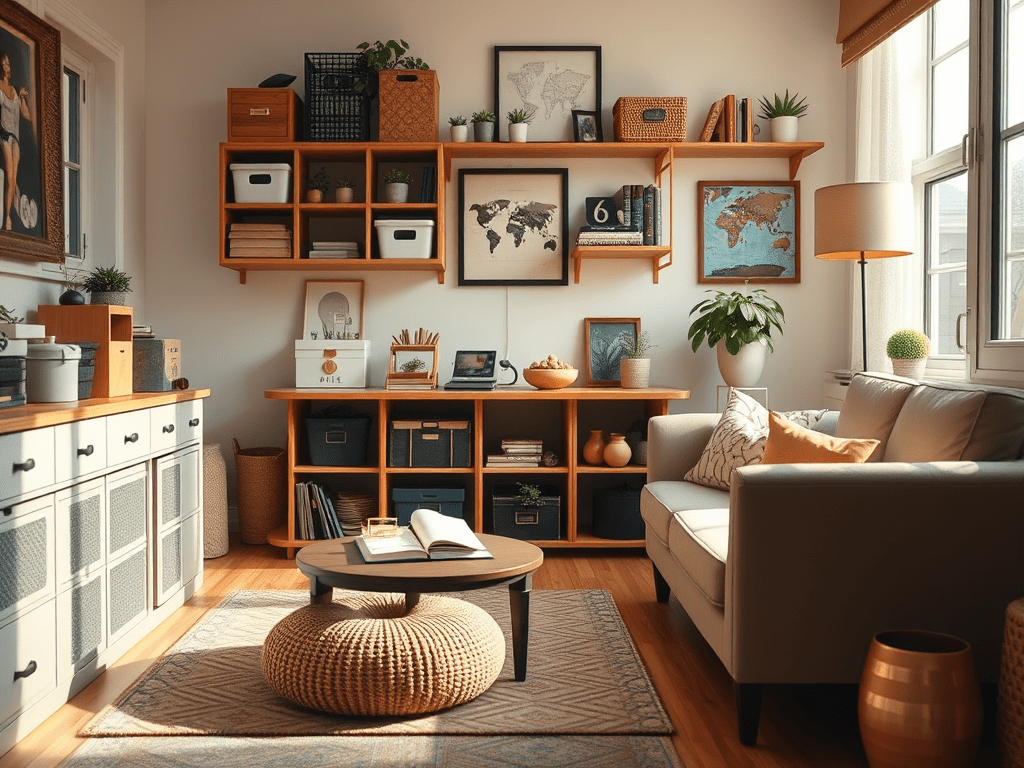
If you live with ADHD, you’ve probably felt the pressure to make your house look tidy, aesthetic, or “Instagram-perfect.” You might even feel like something is wrong with you because your home never seems to stay clean for long. Dishes pile up, surfaces get buried, laundry rotates endlessly, and the clutter feels like it grows faster than you can keep up with it.
But here’s a truth that can completely change how you see your space:
The goal of an ADHD home isn’t perfection —
the goal is functionality.
A functional home for ADHD adults looks different from a traditionally tidy home. It prioritizes ease of use, reduced friction, clear visual cues, and systems that support real ADHD behavior, not idealized routines that collapse after three days.
Most traditional home organization advice fails ADHD adults because it’s built around neurotypical executive function skills: sustained attention, working memory, sequencing, and follow-through. A neurodivergent home needs something else — systems that work with your brain, not against it.
This article will walk you through how to build an ADHD friendly home that supports your routines, lowers overwhelm, and helps your space actually function, even if the aesthetics aren’t perfect. It also includes the ADHD Home Goals Workbook (PDF download)!
Why Functionality Matters More Than Perfection in an ADHD Home
A functional ADHD home is a supportive home — one that reduces cognitive load instead of adding to it. When you think about your space this way, everything starts to make more sense.
Here’s why focusing on functionality over perfection is essential for ADHD adults:
1. ADHD brains experience more friction during daily tasks
Task initiation difficulties, working memory challenges, and prioritization issues mean that even “simple” tasks (like putting away laundry or clearing countertops) involve extra mental steps. A functional ADHD home removes friction so tasks require fewer steps and less executive energy.
2. Sensory overload is real — and your environment can trigger shutdown
Bright lights, cluttered surfaces, too many visual inputs, or unpredictable piles of stuff can exhaust your nervous system quickly. A sensory-conscious ADHD home reduces unnecessary stimulation and builds micro-zones where your brain can breathe.
3. Perfectionism leads to shame — but function builds momentum
ADHD adults often battle all-or-nothing thinking. If the house isn’t spotless, it feels like it isn’t good enough. A functional home gives you permission to focus on what supports your life right now, not what looks impressive to others.
4. You need systems that match real human behavior, not rigid routines
A functional ADHD home is flexible, forgiving, and intuitive. It’s built around how your brain naturally organizes, not how a cleaning show says it “should” look.
When the goal becomes functionality instead of perfection, your ADHD home becomes calmer, easier to manage, and far more sustainable long-term.
What a Functional ADHD Home Actually Looks Like
So what does a functional home for ADHD actually look like?
Here’s the secret:
It looks like a home that supports the way you think, move, and live — not a minimalist showroom. A functional ADHD home often includes:
Clear visual cues
Labels, open storage, transparent bins (sometimes!), and items placed where your eyes naturally land. (Closed cabinets = out of sight, out of mind.)
Easy-access organization systems
Open baskets instead of lids. Drop zones instead of complicated sorting. Hooks instead of hangers.
Zones built around real behavior
If your keys always end up on the counter, the counter is now the key zone.
If laundry piles up near the bedroom door, that’s where the hamper belongs.
Your environment adapts to you — not the other way around.
Systems that reduce decision fatigue
Pre-defined homes for objects. One-step cleaning routines. Small loops instead of big resets. Remember that every item must have a place to belong or it will repeatedly end up as clutter around your home!
Sensory-friendly spaces
Soft lighting, fewer visual distractions, calm areas to decompress.
(A critical piece of any ADHD friendly home setup.)
RELATED: Sensory-Friendly Home Setup (PDF)
“Good enough” surfaces and routines
Not spotless. Not perfect. Just functional. A functional ADHD home won’t always be clutter-free, and that’s okay. It will, however, be a space where your brain feels supported, not constantly overwhelmed or behind.
The 4 Pillars of ADHD Home Functionality
When you shift from perfection to functionality, it becomes much easier to design an ADHD friendly home that actually works for you. These four pillars create the foundation for a calm, supportive, and sustainable living space — no matter how chaotic things feel right now.
ADHD Home Pillar 1: Reduce Friction
ADHD brains struggle when tasks involve too many steps or require too much mental switching, often resulting in ADHD paralysis. A functional home for ADHD adults minimizes barriers by making tasks as easy as possible to start and finish.
Examples:
- Keeping cleaning supplies in the room where they’re used (bathroom wipes in the bathroom, not under the kitchen sink).
- Using open bins instead of lidded containers.
- Placing hampers exactly where clothes tend to land.
- Storing everyday items at eye level for immediate visibility.
Lower friction = higher follow-through.
ADHD Home Pillar 2: Increase Visual Support
Out of sight truly is out of mind for ADHD adults. A functional ADHD home uses visual cues to replace the working memory load your brain shouldn’t have to carry.
Visual support looks like:
- Clear or mesh storage bins (sometimes!)
- Labels everywhere (even on obvious items!)
- Color-coded zones
- Open shelving
- “At-a-glance” organization instead of decorative hiding systems
Visual clarity reduces overwhelm, increases task initiation, and helps you maintain your space without constant mental effort.
ADHD Home Pillar 3: Build Sensory-Safe Zones
ADHD brains are often highly sensitive to sensory input. Noise, clutter, harsh lighting, and sensory overload can quickly lead to shutdown or emotional dysregulation. Your home should offer pockets of sensory rest instead of constant stimulation.
Ideas for sensory-friendly areas:
- Soft lighting instead of bright overhead bulbs
- Minimal visual clutter in the bedroom
- A cozy decompression corner
- Noise buffers (white noise, rugs, curtains)
- Calming colors and textures
A sensory-informed ADHD home gives your nervous system room to recover, which makes functioning easier everywhere else.
ADHD Home Pillar 4: Create Repeatable Micro-Routines (Not Rigid Systems)
ADHD routines need to be simple, repeatable, and low-pressure. A functional home uses micro-routines — tiny loops that keep your space functional without expecting hours of sustained effort.
Examples of micro-routines:
- A 2-minute after-dinner dish loop
- A 5-minute “reset the surfaces” habit
- A laundry flow that moves clothes one stage at a time (wash → dry → basket → put away later)
- A morning visual check-in before starting the day
These miniature systems stabilize your environment without requiring perfection or daily consistency.
How to Redesign Your Home Using the Behavior-First Method
Most organization systems fail ADHD adults because they’re built around ideal behavior — not actual lived behavior. The Behavior-First Method flips this entirely by designing your ADHD home around the way you already function.
This approach dramatically increases success because it removes shame and creates sustainable systems that fit your brain.
Step 1: Observe What’s Already Happening
Before changing anything, spend 24–48 hours noticing:
- Where clutter naturally gathers
- Where you drop items when you walk in
- Where laundry and dishes stagnate
- Which tasks feel hardest to start
- Which spaces cause the most sensory overwhelm
These patterns aren’t failures — they’re information.
Step 2: Build Systems Around Real Behavior, Not Ideal Behavior
Instead of forcing yourself to act differently, create ADHD friendly home systems that match your natural habits.
Examples:
- If mail piles up on the counter → create a mail station on that counter.
- If your closet is too hard to maintain → switch to open shelving + baskets.
- If laundry never gets folded → design a “clean clothes zone” so you can grab-and-go easily.
Your environment becomes an extension of your brain, not a constant battle against it.
Step 3: Remove Barriers and Reduce Steps
ADHD home organization works best when the number of steps is minimal.
Turn 5-step tasks into 1–2-step tasks.
Place everything where the task actually happens.
Eliminate lids, drawers, and doors when possible.
Step 4: Stabilize Your Space With Tiny, Repeatable Loops
Micro-routines create flow without pressure.
- A nightly surface reset
- A “one basket” system for quick tidying
- A 2-minute bathroom wipe-down
- A weekly sensory reset (soft lighting, calming zone refresh)
These loops keep your ADHD home functional even during stressful or low-executive-function periods.
Common ADHD Home Mistakes (and What to Do Instead)
Many ADHD adults blame themselves when their home feels chaotic, but the real issue is usually that the systems weren’t designed for a neurodivergent brain. Here are the most common mistakes — and the ADHD friendly fixes that make life easier.
Mistake 1: Using Closed Storage Systems With Too Many Steps
Fix: Use open bins, baskets, hooks, and shelving to reduce friction and increase visibility.
ADHD Home Mistake 2: Expecting Yourself to Maintain Rigid Routines
Fix: Switch to micro-routines and flexible loops that support your energy levels.
ADHD Home Mistake 3: Trying to Organize Before Decluttering “Hot Zones”
Fix: Clear key functional surfaces first — kitchen counters, entryway, bathroom sink — then build systems around them.
ADHD Home Mistake 4: Designing Your Home Around Who You Wish You Were
Fix: Build systems for who you are today. Behavior-first design keeps ADHD homes functional long-term.
ADHD Home Mistake 5: Focusing on Aesthetics Instead of Usability
Fix: Choose systems that work, even if they’re not Pinterest-pretty. Functionality comes first.
Real-Life Examples of Functionality > Perfection
A functional home for ADHD doesn’t look like a magazine — it looks like a space that actively supports your executive functioning. These real-life examples show how small shifts can completely transform how your home feels and how easily you move through your day.
Example 1: The “Good Enough” Dish System
Instead of expecting yourself to wash, dry, and put away dishes every night (a 5–7 step process), you create a 2-step functional system:
- Rinse → dishwasher
- Run when full
Even if clean dishes stay in the dishwasher for a day or two, the kitchen stays functional.
No pileups. No shame spirals. No overwhelm.
This is what a functional ADHD home looks like — less friction, more flow.
Example 2: The Visual Laundry Zone
Folding laundry is often a bottleneck for ADHD adults. Instead of forcing a system that never sticks, you create a clean clothes zone:
- A large open basket
- Clearly visible
- Near the bedroom
- Easy to grab from without digging
Suddenly laundry becomes a one-step process, not a multi-step mountain.
The home stays functional even if nothing is perfectly folded.
Example 3: Sensory Rest Spaces
If your ADHD home setup usually involves overstimulation (bright lights, clutter, noise), you intentionally carve out a low-stimulation zone:
- Soft lamp or string lights
- Noise buffer
- Comfortable seat
- Minimal visual clutter
- A soft object or blanket
This space becomes a decompression zone — a reset button for your nervous system.
Functionally, it reduces shutdowns and helps you re-engage with your home afterward.
Example 4: Behavior-First Entryway
Instead of fighting the instinct to dump keys and bags on the counter, you create a designated drop zone:
- Tray for keys
- Hook for bag
- Basket for mail
Now the space stays controlled, not chaotic — and your ADHD home organization works with you, not against you.
Creating Your Own ADHD-Friendly Home Plan
You don’t need a full home renovation. You don’t need to buy expensive organization systems. You don’t even need to clean every room before you start.
A functional ADHD home emerges from small, strategic changes that support your brain’s energy, attention, and sensory needs.
Here’s a simple ADHD home plan you can follow to redesign your space intentionally.
Step 1: Identify Your “Pain Points”
Look around your home and note:
- What areas make you shut down?
- What chores you avoid the most?
- Where clutter builds fastest?
- Which sensory inputs overwhelm you?
These are places where your environment is mismatched to your needs.
Step 2: Choose One Functional Goal for Each Area
Examples:
- Kitchen: “I want to be able to cook without clearing the whole counter.”
- Entryway: “I want a place for keys and bags that doesn’t get buried.”
- Bedroom: “I want a sensory-safe sleep space.”
- Bathroom: “I want a 2-minute nightly reset routine.”
Simple. Functional. ADHD-friendly.
Step 3: Redesign With Friction in Mind
For each area, ask:
- How can I reduce steps?
- How can I make this more visual?
- How can I prevent overwhelm?
- What would make this easier on low-energy days?
These questions are the heart of ADHD home design.
Step 4: Implement One Micro-Change at a Time
- Add a hook
- Create a drop zone
- Move a hamper
- Label a bin
- Add a soft lamp
- Declutter one surface
- Do a 2-minute reset
Each tiny shift increases overall functionality — and your home slowly transforms.
Step 5: Build Routines That Reflect Real Behavior
Your ADHD home plan should include micro-routines like:
- A nightly 2-minute surface reset
- A morning check-in
- A weekly sensory reset
- A “hot spot” tidy once per day
- A dish loop that prevents overwhelm
These loops make the home stable even when your executive functioning fluctuates.
Download the ADHD Home Goals Workbook
To help you redesign your space with clarity and confidence, grab the free ADHD Home Goals Workbook— a simple PDF that walks you through:
- defining what “functional” means for you
- mapping your pain points
- creating ADHD-friendly systems
- designing behavior-first routines
- setting meaningful home goals
Download the free workbook to start building a functional ADHD home that supports your brain!
Want more on achieving a clean ADHD home?
- Check out the printable PDFs and worksheets
- Check out the latest from the blog
- Still feeling stuck? Check out How to Clean with ADHD Cleaning Overwhelm
 Neurodivergent Home Systems
Leave a comment